COMPARISON LAMINATE AND MELAMINE IN DETAIL
In the field of interior design, the selection of decorative materials for overlaying engineered wood is comparable to the choice of armor for a warrior. High-quality armor serves not only to protect but also to enhance the aesthetic appeal of the product or interior space. This analysis aims to delineate the differences between Laminate and Melamine by examining their structural characteristics, durability, load-bearing capacity, manufacturing processes, and associated advantages and disadvantages. Such an examination will yield a more objective understanding of which material is superior in various applications.
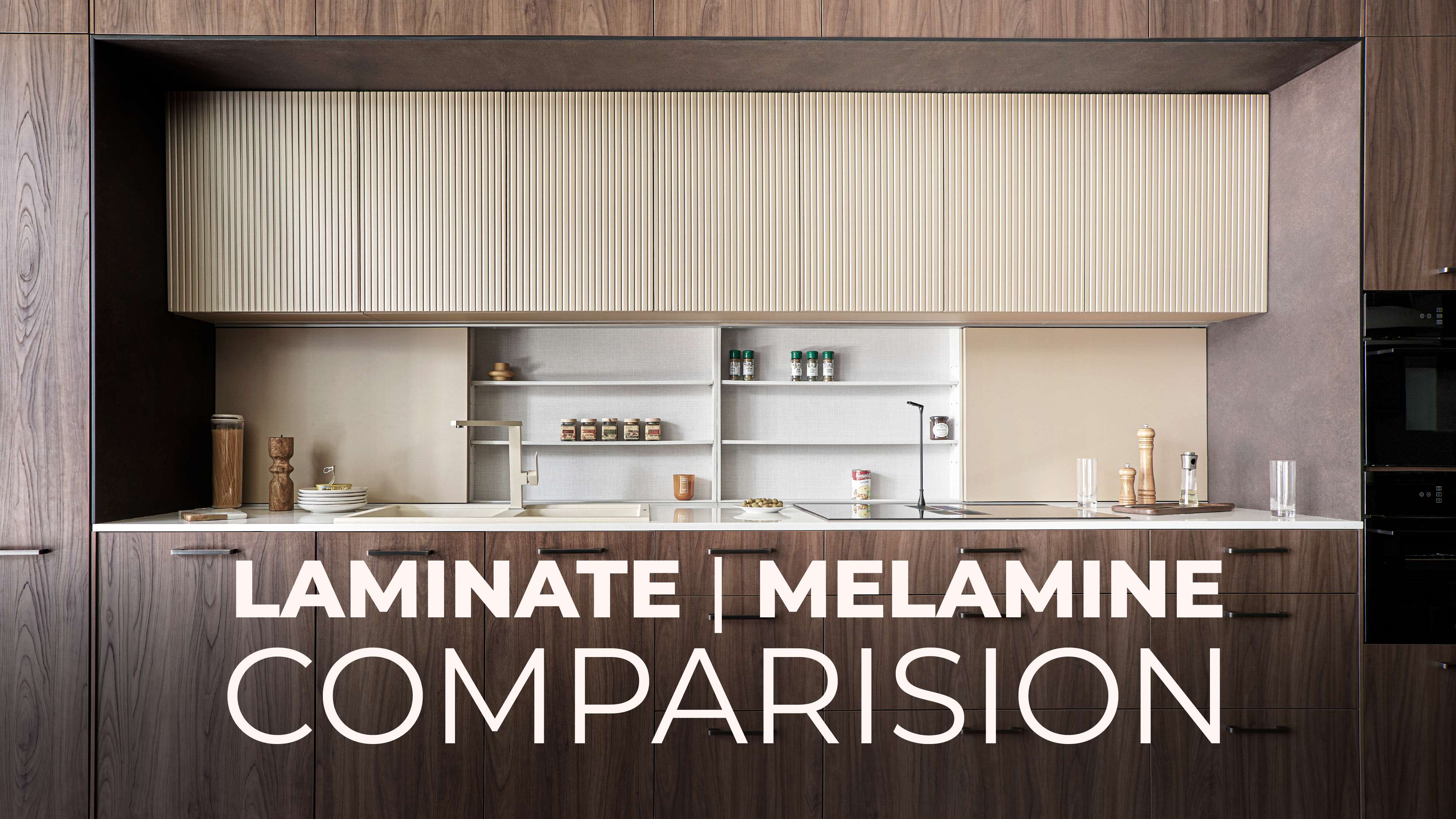
LAMINATE AND MELAMINE DESCRIPTION
Laminate and Melamine have emerged as predominant surface materials for engineered wood within the realm of contemporary interior design. Their remarkable ability to mimic a variety of natural wood grains and contemporary colors, coupled with enhanced durability and resistance properties, positions them as preferred selections for luxurious and modern living environments. These materials effectively meet the growing consumer demands for both aesthetic appeal and improved quality of life.
As a consequence, it is essential to explore the distinctions between Laminate and Melamine in greater detail.
Laminate
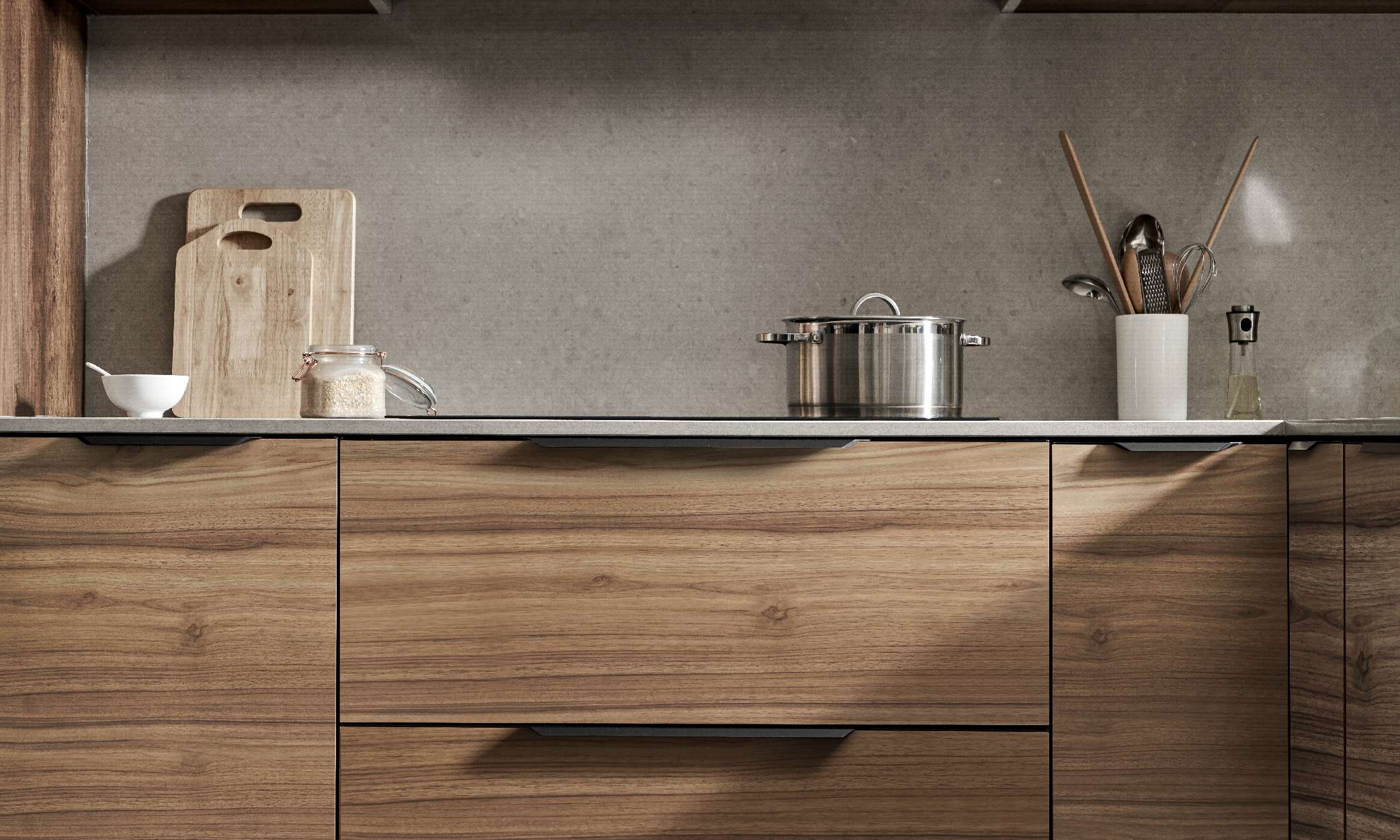
Laminate surfaces rank among the most widely utilized decorative materials in the construction industry. Characterized by a diverse array of colors and patterns, laminate offers remarkable durability, making it a preferred choice for laminating industrial wood. This not only enhances the aesthetic appeal but also significantly bolsters the product's durability, scratch resistance, and heat resistance. As such, laminate serves as an ideal solution for interior designs that demand sophistication and long-lasting performance.
Melamine
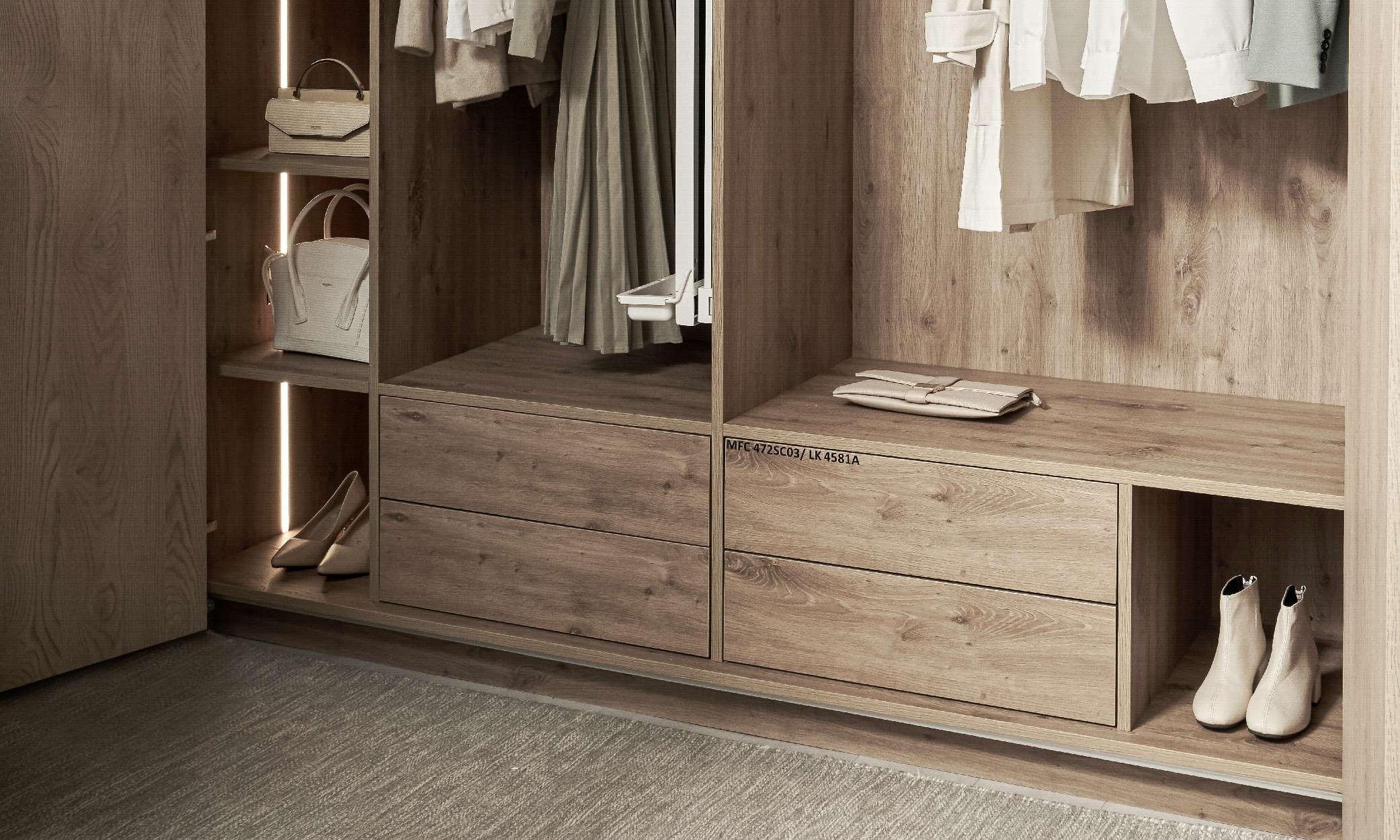
Similar to Laminate, Melamine surface consists of a decorative paper layer impregnated with melamine resin, which is then heat-pressed onto engineered wood to form a durable, hard-wearing finish. This production method yields a robust surface with enhanced hardness, durability, and particularly strong load-bearing capabilities. Known in the industry as Melamine paper or Melamine board, this material is widely used and available in various forms based on the wood core type, such as MFC (Melamine Faced Chipboard), Melamine MDF, Melamine HDF, Melamine Plywood, or Melamine WPB. Laminate and Melamine are synthetic surface materials extensively applied in interior design, particularly for engineered wood furniture. Both materials share 05 characteristics, providing durable and aesthetically pleasing finishes for various applications.

1. Structure from decorative paper
The structure of both products is crafted from specialized decorative paper layers, delivering a richly varied surface in terms of patterns and color schemes, which aligns with diverse aesthetic demands in contemporary interior design. These decorative layers are essential for achieving visual appeal and a refined tactile quality in the final product. Produced with meticulous precision and advanced techniques, these layers authentically reproduce natural wood grains, stone textures, or abstract motifs, resulting in a realistic and vibrant effect on the surface of the material.
2. Improve aesthetics
Enhancing aesthetics involves thoughtful integration of visual appeal, balance, and harmony within a design, ensuring that each element contributes to the overall aesthetic experience. It entails selecting materials, colors, textures, and forms that elevate the visual coherence and sophistication of the space or product, aligning with both functional requirements and the intended emotional or sensory impact on the viewer. Achieving this aesthetic enhancement often requires a nuanced understanding of design principles and the cultural or contextual significance of aesthetic choices.
3. Protect wood core
These two types of decorative surface materials serve as protective and functional finishes for engineered wood panels, effectively enhancing both durability and resilience. Laminate and Melamine each form a robust protective layer, safeguarding the wood core against adverse environmental influences, including humidity, temperature fluctuations, light exposure, and mechanical wear that could otherwise deteriorate the surface and compromise product longevity. Moreover, these coatings prevent moisture absorption, resist abrasion and scratches, and help preserve the material’s aesthetic and structural integrity over extended use. Thus, they contribute significantly not only to physical protection but also to elevating the visual appeal and functional quality of engineered wood products, thereby enhancing the overall value and durability of interior applications.
4. Widely application in interior design
Laminate and Melamine are widely recognized as essential surface materials in the interior design sector, particularly for items such as kitchen cabinetry, wardrobes, tables, chairs, and decorative wall panels. Their versatile properties and ability to meet sophisticated aesthetic standards make them highly adaptable for various design styles, providing effective finishing solutions for diverse interior concepts. The broad applicability of these materials allows for cohesive design choices across settings, from residential apartments to expansive commercial spaces, underscoring their significance not only as decorative elements but as foundational materials shaping modern interior aesthetics and responding to varied consumer preferences.
5. Friendly environment
Laminate and Melamine coatings are crafted from recycled materials, aligning with sustainable and environmentally conscious practices. Their recyclable nature and eco-friendly production processes contribute to reducing greenhouse gas emissions and pollutants, supporting green standards within the construction and interior design sectors. Consequently, when paired with industrial boards such as MDF, HDF, or particle board, these coatings enhance both the aesthetic and functional value of products while exemplifying the industry’s commitment to sustainable development. This fosters a more sustainable living environment and reinforces efforts to protect the natural world.
LAMINATE AND MELAMINE COMPARISON
Stucture
Laminate
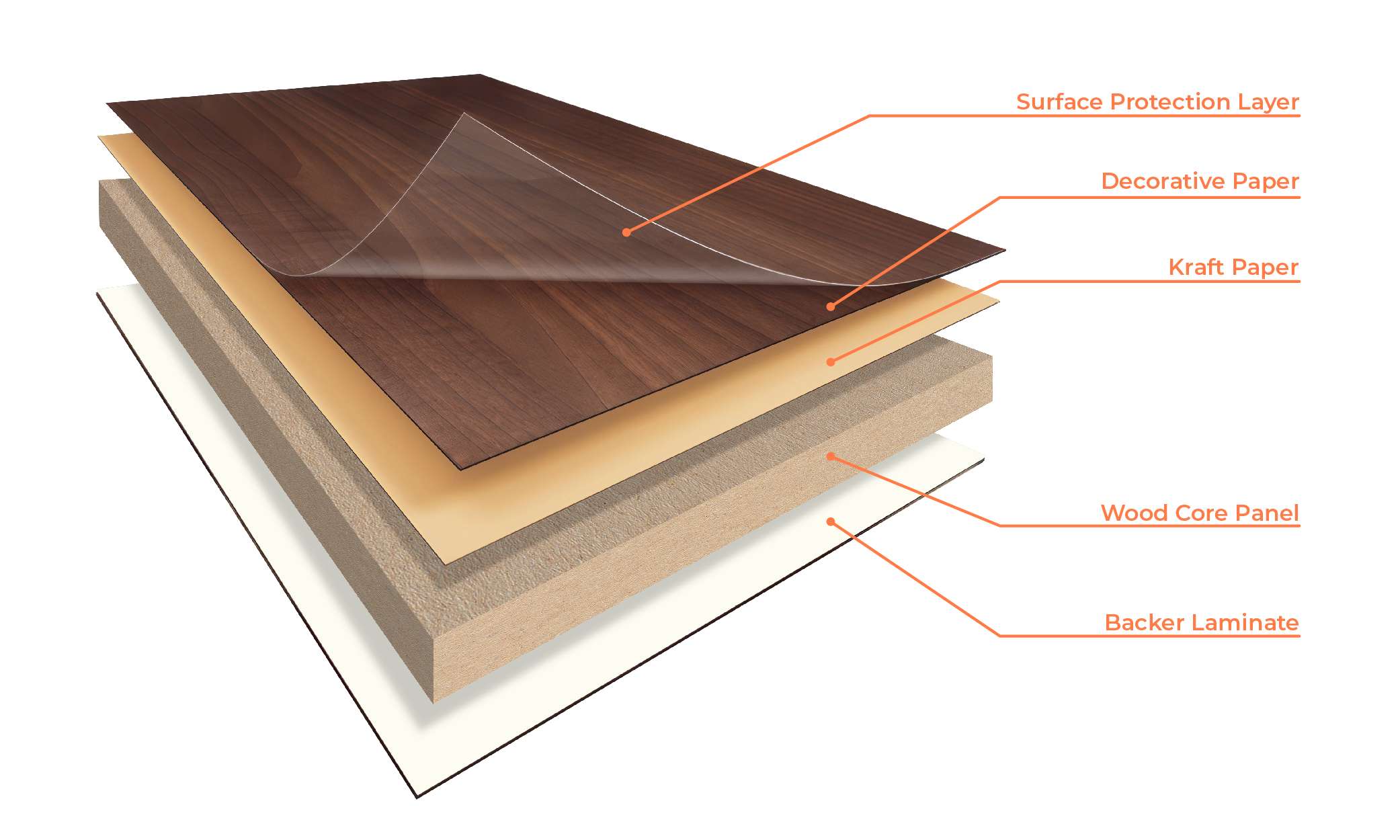
1. Surface proctetion layer
The transparent plastic coating on Laminate panels features a tightly interlinked network structure, enhancing both aesthetics and functionality. This coating serves as a robust protective layer that prevents external forces from compromising the wood core. Its superior resistance to abrasion, chemicals, and heat ensures that the surface is safeguarded against environmental impacts, thereby preserving the natural beauty and color integrity of the product over time. Moreover, akin to a protective layer of paint on a canvas or a polyurethane finish on natural wood, this plastic layer accentuates the allure of the wood grain, contributing to a luxurious and contemporary living environment.
2. Decorative Paper
The decorative layer, produced through advanced printing technology and thermal lamination, authentically replicates the aesthetic appeal of natural wood with a wide variety of colors and grain patterns. The thermal lamination process forms a durable bond between the decorative paper and the substrate, ensuring color retention, moisture resistance, and heat resistance, thereby meeting the stringent quality standards in the interior design industry. The final product not only exhibits high aesthetic value but also fulfills durability requirements and is easy to clean, aligning with modern interior design trends.
3. Kraft Paper
The base paper layer of the Melamine board is crucial in determining the technical characteristics that confer hardness, durability, and resistance to the Laminate board. This layer's mechanical properties including tensile strength, compressive strength, and elasticity are essential as they influence the Laminate's ability to resist deformation and its overall lifespan, thus meeting the stringent requirements of the furniture manufacturing industry. Furthermore, the Laminate board's resilience against environmental forces and its stability are significantly dependent on the quality of the base paper layer.
Melamine
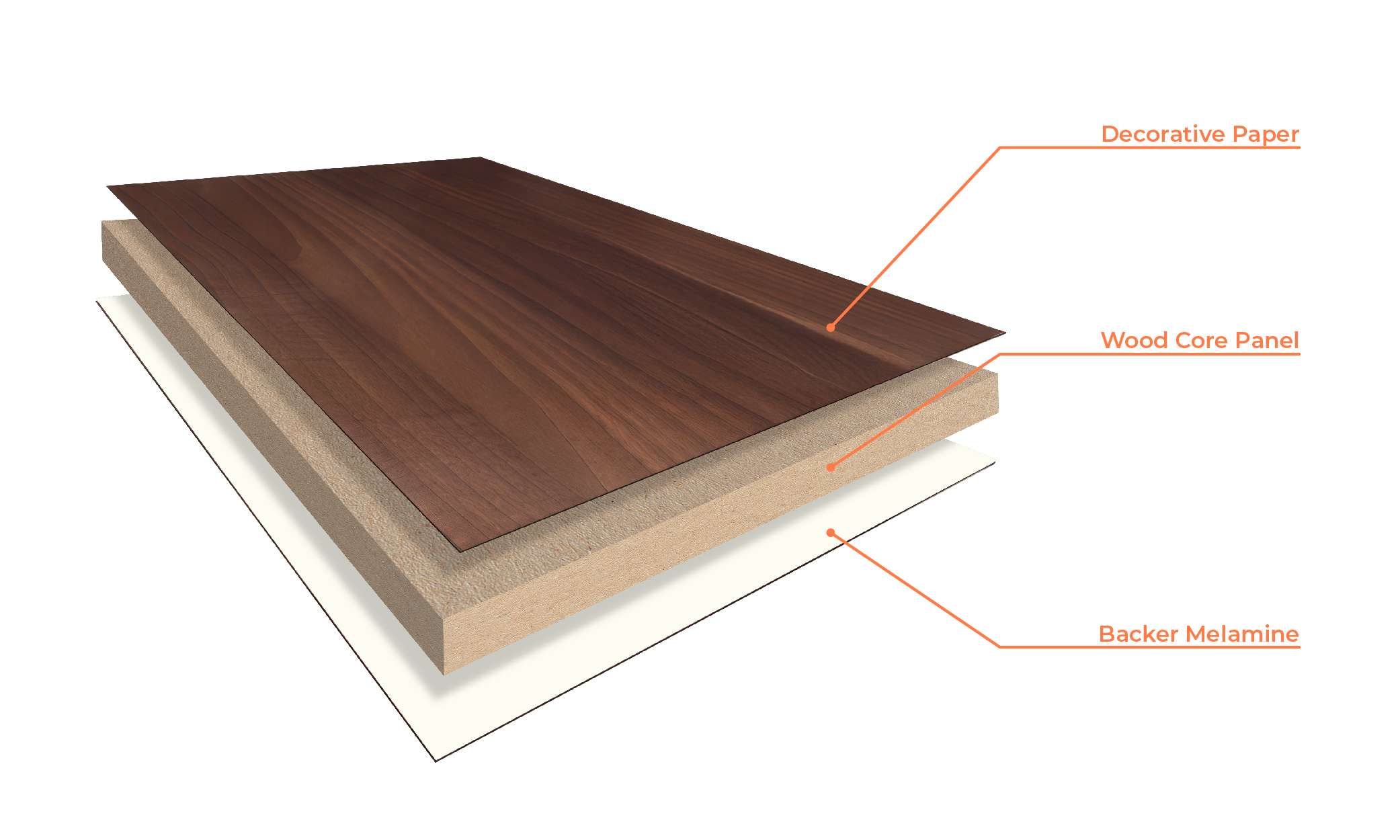
Melamine is produced using wood grain or monochrome printed paper, which is rolled into sheets. This printed paper undergoes a process of dipping in Melamine glue, resulting in a Melamine Decorative Sheet, also referred to as a Melamine Decor sheet, with a thickness of 0.3 mm. Essentially, the structural composition of Melamine comprises two distinct layers: the printed surface and the adhesive layer, which together create a durable and aesthetically pleasing finish suitable for various applications in interior design.
1. Decorative Paper
Decorative Paper, also known as Decorative Paper, is printed with sophisticated patterns and colors to realistically simulate natural wood grain. The printing process and advanced technology in the production of decorative paper play an important role in creating sharp and diverse patterns, bringing high aesthetics to interior products.
2. Melamine glue layer
The adhesion between the decorative paper layer and the core board, as well as the scratch resistance and surface coverage, is significantly influenced by the quality of the Melamine glue layer. Higher quality glue enhances adhesion, coverage, and surface protection, thereby improving aesthetics and durability, which ultimately extends the product's lifespan. Analyzing the structural characteristics reveals that Laminate and Melamine exhibit distinct surface features. Specifically, Laminate has a greater thickness (ranging from 0.6 to 1.3 mm) compared to Melamine (0.3 mm), resulting in enhanced durability and load-bearing capacity for Laminate, as it is less prone to brittleness and bending.
Thickness
Laminate and Melamine exhibit significant differences in thickness. Specifically:
Laminate
Laminate exhibits significant thickness, typically ranging from 0.7 to 1.0 mm, due to its composite structure comprising three distinct layers: the base paper, decorative paper, and a protective layer. This strategic layering not only enhances the material's overall durability but also significantly improves its resistance to impact and surface wear. Consequently, the design of laminate ensures superior protection and longevity, making it an ideal choice for various applications in interior design and construction.
Melamine
Melamine typically exhibits an average thickness of approximately 0.3 mm, a measurement that reflects its characteristic structure. This single-layer configuration results in Melamine being generally thinner than Laminate, which features a more complex three-layer structure. Consequently, Laminate possesses a greater overall thickness compared to Melamine. This distinction in structural composition influences not only the physical properties of each material but also their applications within various design contexts.
Production process

The production process of Melamine and Laminate has significant differences, which directly affects the quality as well as the distinct characteristics between the two product lines. The difference in production techniques not only affects the durability and scratch resistance but also affects the aesthetics, advantages and disadvantages and practical applications of each type of material.
Laminate
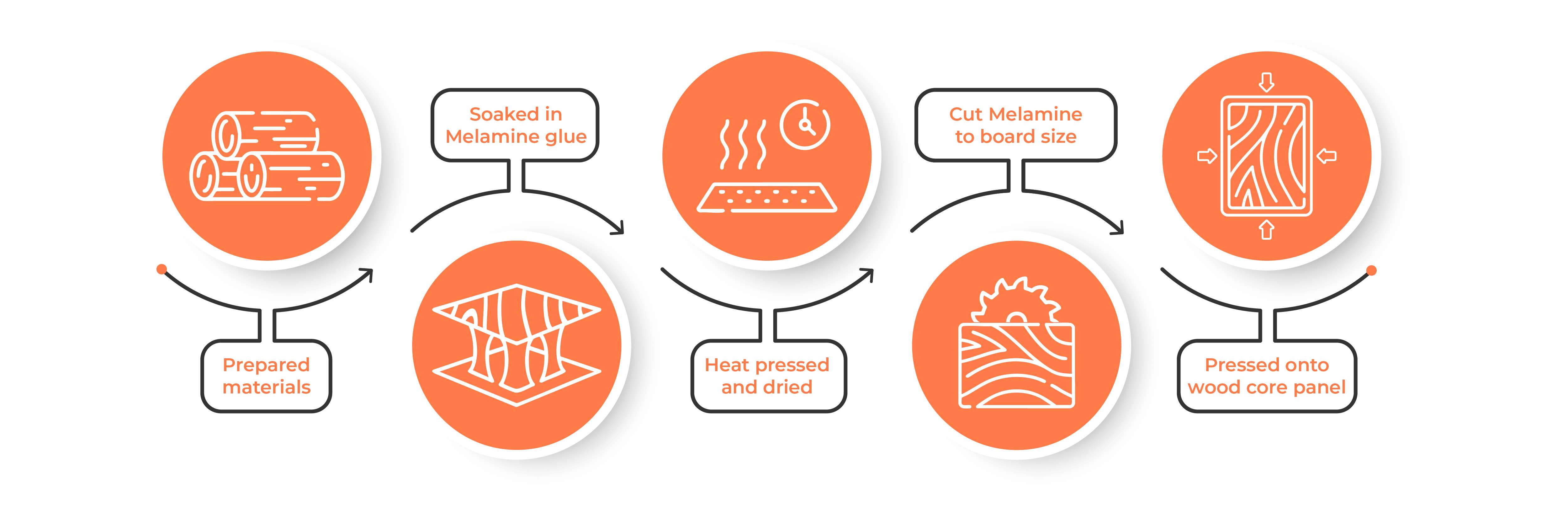
- The Laminate production process is complex and requires high technical requirements
- The main raw materials include decorative paper, Melamine glue and Kraft paper
- Decorative paper layer is soaked in a Melamine glue tank to create optimal adhesion between the protective coating (Overlay) and the Kraft paper layer.
- From there, the product's load-bearing capacity and durability are increased.
- After being soaked in glue, the material layers are arranged on top of each other in a specific order: the Kraft paper layer at the bottom, followed by the decorative paper layer, and the Overlay layer at the top.
- This arrangement helps ensure the stability and durability of the Laminate sheet, while improving the aesthetics of the finished product.
- The temperature during the pressing process ranges from 150 to 200 degrees Celsius, helping the Melamine glue flow evenly and bond the material layers.
- After pressing, the Laminate sheet will be dried, ensuring the best finishing glue. In the final stage, the product will be thoroughly checked to detect and fix any errors that may occur before finishing.
- When the pressing process is completed, the Laminate sheet is cooled. The Laminate sheet is cut into standard sizes. Laminate is ready to use or press onto industrial wood panels.
Melamine
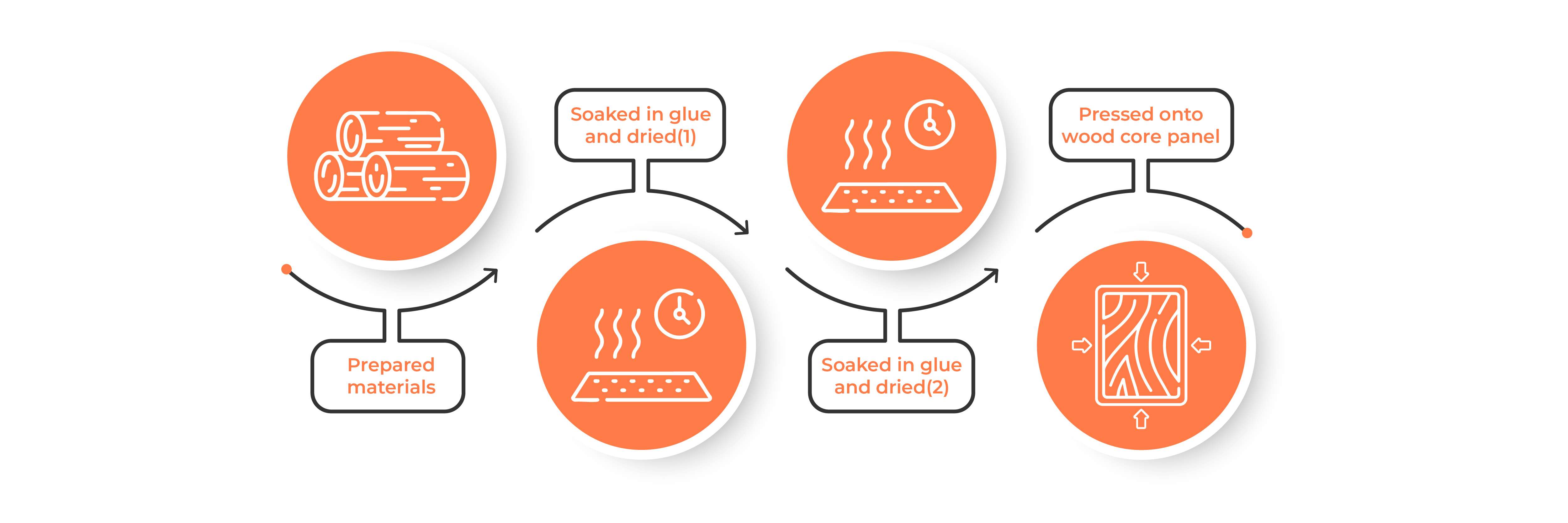
- The production process of Melamine is simpler and has fewer steps than other types of surfaces.
- The main raw materials include decorative paper and Melamine glue.
- The quality of Melamine panels depends on the decorative paper, Melamine glue and the paper dipping process.
- Decorative paper simulates natural wood grain and is usually supplied in rolls.
- Decorative paper roll is dipped in Melamine glue tank and dried 02 times
- The dipping and drying process of Decorative Paper Sheet ensures that the paper absorbs enough glue, achieves the necessary tension and dryness, and covers defects.
- The final product has high hardness and resistance to external forces thanks to complete glue absorption.
- Store in cold storage at a temperature of 15-25 degrees Celsius and the preservation time is 02 months.
Price
Laminate
- Laminate prices often fluctuate depending on type, thickness, color and pattern
- Thick, durable and scratch-resistant Laminate panels are more expensive
- Production technology and origin affect Laminate prices
- Special complex colors, patterns or effects are more expensive than regular types
Melamine
- The price of the product is suitable for many customer groups
- The price of Melamine panels varies depending on factors such as color, thickness and other factors
Contact now to receive the best Melamine and Laminate price quotation in 2024. In addition, you can refer to interior design projects that have been implemented with An Cuong materials, to have more optimal choices for your interior space.
Scratch resistance and durability
Laminate
- Compared to Melamine, Laminate is more scratch-resistant thanks to the Overlay layer
- The Overlay layer creates a hard protective film, which enhances resistance to abrasion, impact, chemicals and high temperatures.
- Thanks to these protective properties, Laminate is more durable than Melamine.
- Laminate is suitable for applications that require aesthetics and good load-bearing capacity.
- Laminate products are suitable for harsh environments due to their high stability.
We can quickly test the scratch resistance of Melamine and Laminate surfaces by manual methods. That is, using a key or scissors to rub on the surface. Of course, Melamine surfaces are easily scratched, while Laminate shows higher durability and is not affected by similar impacts.
Melamine
- Melamine is known for its scratch resistance, but its durability is not high.
- When hard objects come into contact with the surface, the Melamine glue layer acts as a barrier to prevent environmental impacts.
- This coating helps limit the creation of scratches on the surface compared to many other materials.
- However, this does not mean that Melamine is completely undamaged.
- If the impact is strong or the sharp object is hard, Melamine can still be scratched.
Color and woodgrains
|
|
Color |
Woodgrains |
|
Laminate |
The color palette of Laminate is notably diverse, encompassing a range of basic monochrome shades to intricate tonal variations. This variety provides consumers with numerous options tailored to different interior design styles, thereby addressing aesthetic requirements while fostering the creation of sophisticated and dynamic living and working environments. The rich spectrum of colors reflects the individual personality of the user, contributing to the establishment of unique spatial experiences that enhance the overall ambiance of a space. |
The vibrant colors and intricate patterns of laminate surfaces effectively cater to a wide range of aesthetic preferences. By integrating advanced technology, these surfaces can closely replicate the appearance of natural materials, enhancing their appeal. Additionally, laminate exhibits high applicability in the manufacturing of quality interior products, making it a versatile choice in contemporary design. An Cuong offers 06 popular types of Laminate surfaces: Kingdom Laminate, Lacquered Laminate, Compact Laminate, IMO Laminate, Formica Laminate, and Kingdom Basic Laminate, each serving distinct functional and aesthetic needs.
|
|
Melamine |
Melamine is characterized by a diverse array of colors and patterns, encompassing both solid hues—such as black, white, and gray—and wood grain variations, including Oak, Ash, and Walnut. Additionally, it features designs that replicate natural materials like stone, cement, and fabric textures. This extensive range not only enhances aesthetic appeal but also allows for versatile applications in various interior design contexts, catering to different stylistic preferences and functional requirements. |
Melamine samples exhibit a realistic wood-like appearance, allowing for seamless integration across various design styles, ranging from modern to classic. The application of advanced Embossed In Register (EIR) technology, originating from the Federal Republic of Germany, enhances the precision in creating embossed wood grain details on MFC, Melamine MDF, and Melamine HDF boards. This technology ensures that the industrial boards exhibit wood grains that closely match natural wood characteristics, including wood eyes and natural lines, resulting in an aesthetically sophisticated appearance that is often indistinguishable from genuine wood. |
Advantages and disadvanatages
Advantages of Laminate
- Laminate has outstanding durability and load-bearing capacity, surpassing many other materials.
- The special manufacturing process helps Laminate resist scratches, abrasion and heat better.
- Thanks to these features, Laminate becomes an ideal choice for spaces with high humidity, such as kitchens and bathrooms.
- Laminate can also simulate natural surfaces such as wood or stone, creating luxury and sophistication for the interior space.
Disadvantages of Laminate
- The Laminate construction process is more complicated and requires high technical requirements along with longer implementation time, which can affect work progress.
- The structure of Laminate includes three layers, leading to its heavier weight, which can increase transportation and installation costs.
Advantages of Melamine
- Melamine stands out with its diverse application in interior and decoration.
- Diverse designs, rich, similar to real wood and meets many design styles
- Melamine production speed is fast and efficient, does not require much human resources
- Often used in the production of products such as kitchen cabinets, beds, dining sets, bookshelves, and many other products.
- The flexibility of Melamine helps to enhance the aesthetics of interior products.
- Contributes to optimizing the functionality in modern living spaces.
- Ensures convenience and suitability for different spaces.
Disadvantages of Melamine
- Melamine is easily scratched and not very durable.
- Melamine surface is easily damaged when exposed to high temperatures or strong impacts. Melamine's water resistance is not good.
- Melamine is not suitable for areas that are frequently exposed to moisture.
- Not flexible, not suitable for curved designs
Application
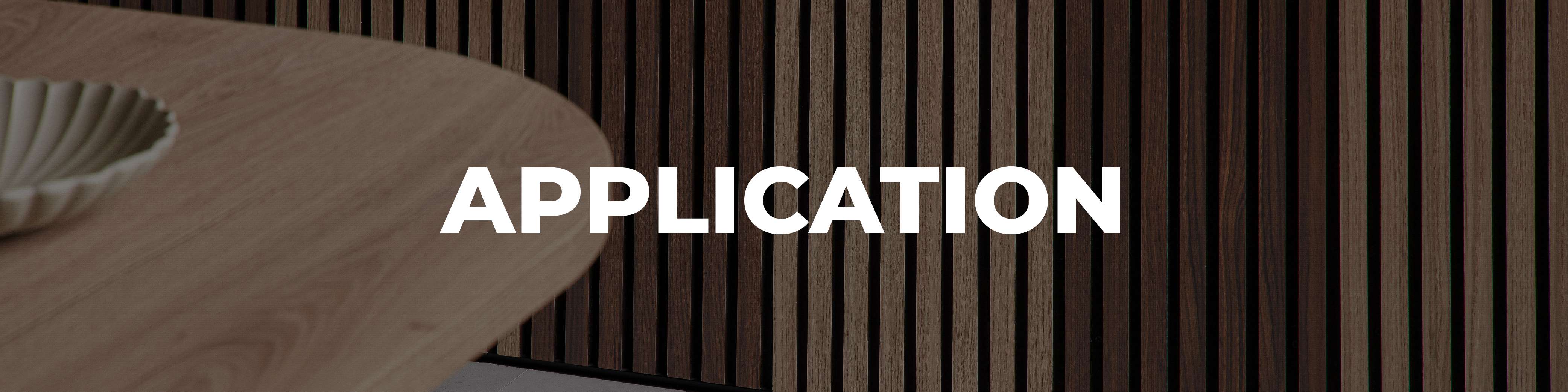
The applications of Melamine and Laminate in the field of interior and construction are extremely diverse, each type of material has its own strengths, meeting the specific needs of each product. Both surfaces contribute significantly to improving the quality and aesthetics of architectural works. Let's learn more about the applications of Melamine and Laminate.
Laminate
Laminate panels are opening up many very special application possibilities for the wood and interior decoration industry.
High-end furniture: Laminate is used mainly in high-end furniture products due to its high durability and resistance to scratches and abrasion. Typical applications include kitchen cabinets, dining table tops, desks, and beds in spaces requiring high durability and aesthetics.
Kitchen and Bar Countertops: With its heat, water, and chemical resistance, Laminate is an ideal material for kitchen countertops, bars, or food preparation areas. Laminate's abrasion-resistant properties also help it maintain its beauty and durability under harsh conditions.
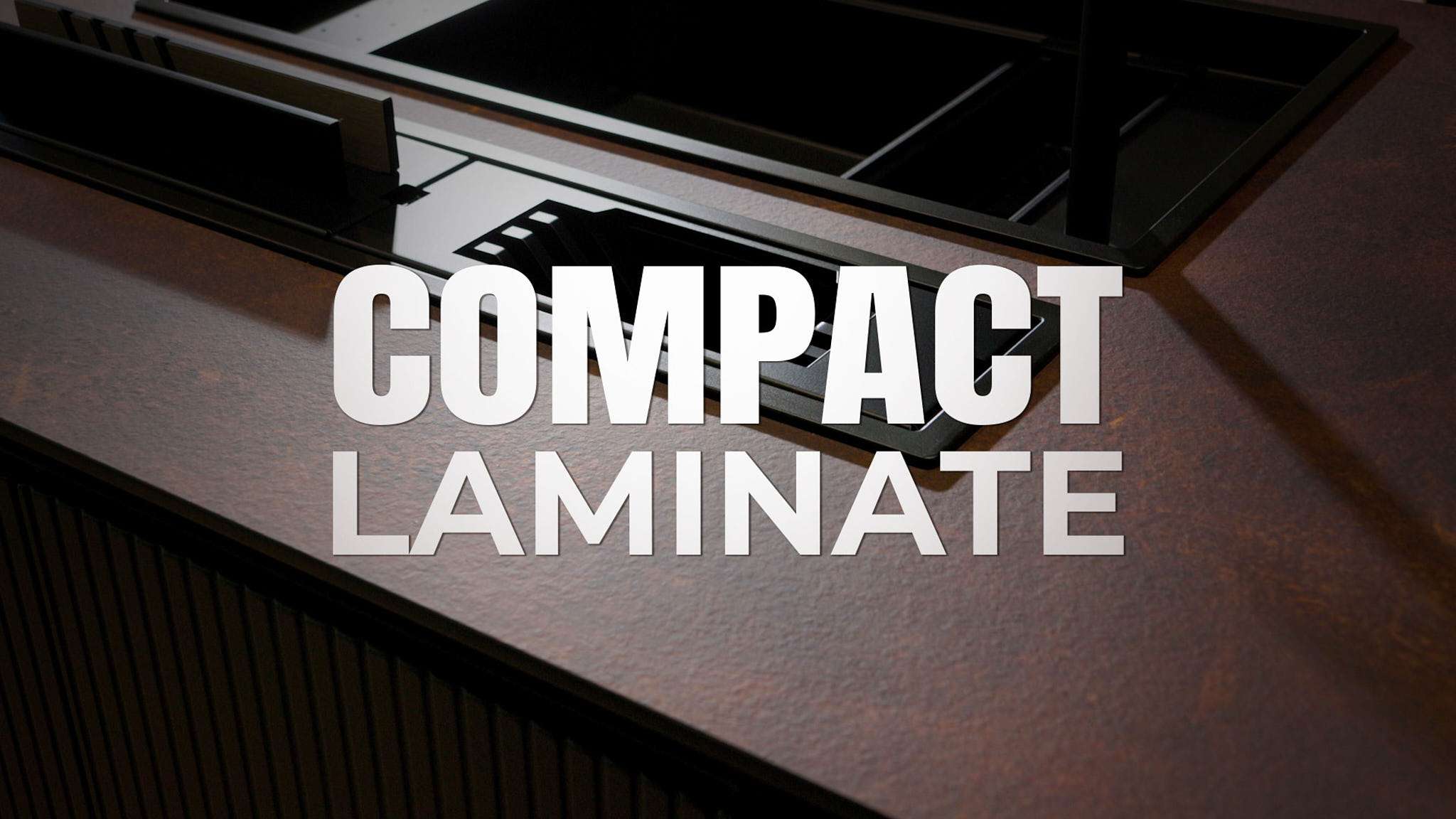
Compact Laminate has the ability to withstand heat up to 250-300 degrees Celsius and scratch resistance equivalent to stone.
Wall cladding and partitions in public areas: Laminate is widely used in public areas such as restaurants, hotels, offices, thanks to its good resistance and easy cleaning. In addition, it is also used as a wall cladding and partition material in places with strict requirements on hygiene and durability, such as hospitals or laboratories.
Flooring: Laminate is used to make industrial wood floors thanks to its load-bearing and scratch-resistant properties. It is a good alternative to natural wood floors in spaces that require aesthetics and durability, such as floors in houses, offices or hotel rooms.
At An Cuong, Laminate is applied creatively and flexibly in advanced design solutions such as U, J, UJU handles, along with modern processing methods. In particular, Laminate plays an important role in the no-line edge banding solution, helping to create a seamless surface, leaving no seams, bringing perfect aesthetics and sophistication to every product detail.
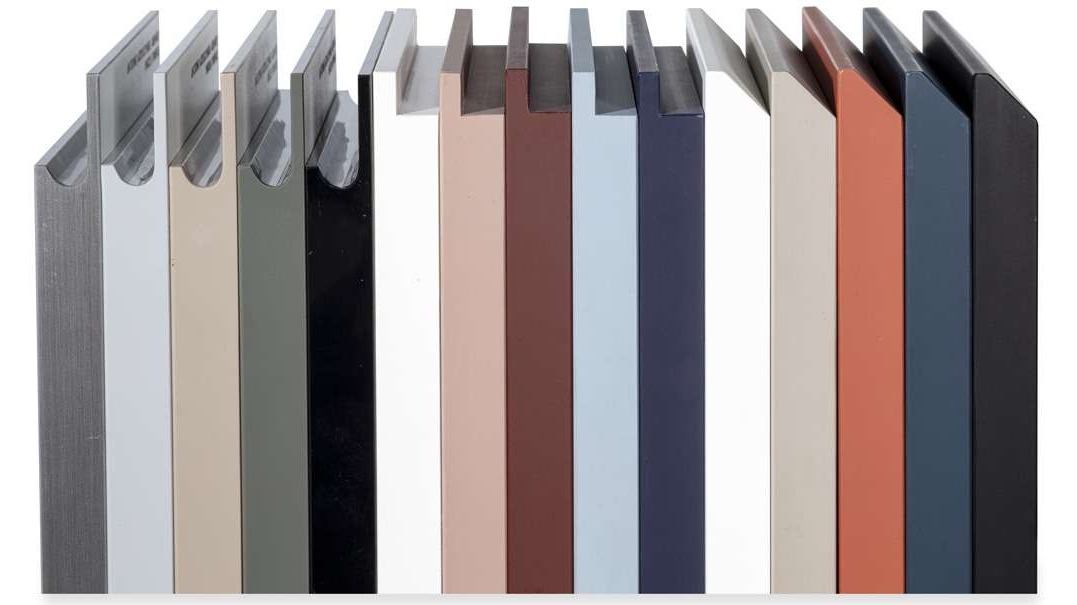
In addition, Laminate is also used in the processing of Shaker and Micro Shaker doors, featuring minimalist, elegant but equally luxurious lines. These applications not only bring modern and sustainable beauty, but also demonstrate the diversity and flexibility of Laminate materials in interior designs that require precision and high quality. An Cuong has cleverly utilized the capabilities of Laminate to create products that are both beautiful and durable, in line with modern interior trends.
Not only that, a prominent feature in the application of Melamine and Laminate is the sophisticated coordination of An Cuong, to create a superior surface solution in Collection No. 6 - Art Wood. This combination is inspired by nature, rustic, not only maximizing the unique advantages of each type of surface and wood grain. See more color chart of Collection No. 6 - Art Wood An Cuong

Melamine
Office and home furniture: Melamine is often used to cover the surface of industrial wood products such as MDF, HDF, or particle board. Depending on the wood core, when covering the Melamine surface, we will have Melamine Face Chipboard (MFC), Melamine MDF or Melamine HDF. Melamine-coated wood products are widely used in products such as wardrobes, kitchen cabinets, desks, study tables, bookshelves, and beds. This is a popular choice in low- to medium-priced interior designs.
Production of cabinets and display shelves: Due to its reasonable price and ease of construction, Melamine is often used in the production of cabinets and display shelves in stores or shopping malls. Diverse colors and rich designs help Melamine suit many different design styles.
Partitions and wall panels: In addition to the application of producing cabinets and display shelves, Melamine is also used as a coating material for office partitions, or wall panels in modern interior spaces. This material helps create a smooth, easy-to-clean and highly aesthetic surface.
Smart furniture: Due to its light weight and ease of construction, Melamine is also used in smart, flexible furniture products, such as folding tables, mobile shelves, or multi-functional items suitable for small spaces.
HOW TO DISTINGUISH LAMINATE AND MELAMINE
The surface of Melamine and Laminate décor materials cannot be identified by the naked eye because these two materials are quite similar in color, wood grain and real wood effect. However, we can distinguish these two surfaces based on:
Scratch resistance
The scratch resistance of Laminate is significantly greater than that of Melamine. To evaluate the durability of these materials, sharp objects, such as keys, can be employed to scrape their surfaces. When subjected to external forces, Laminate panels exhibit remarkable resilience, showing no signs of scratching. In contrast, Melamine panels are more prone to scratches, primarily due to the inherent structural differences, which include a protective layer in laminate that enhances its resistance to wear and tear. This distinction underscores the importance of material selection in applications where durability is a priority.
Product catalogue
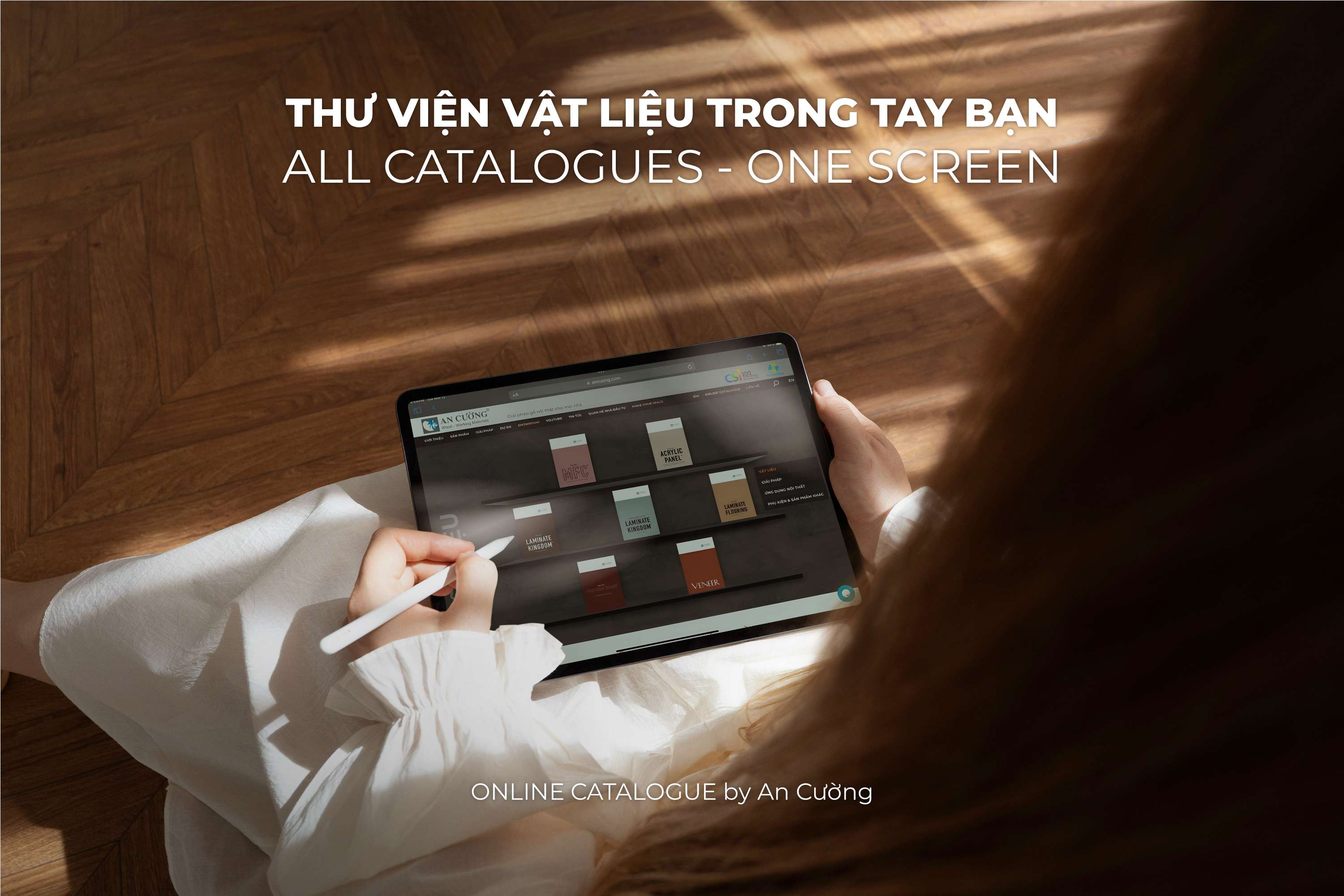
When customers engage with a specific brand to purchase products, detailed information regarding Laminate and Melamine panels is readily available, encompassing product codes, color options, and surface finishes. Notably, An Cuong's catalog effectively differentiates between Laminate and Melamine, facilitating consumers in selecting products that align with their preferences and requirements. To access further information on these materials, users can utilize the AC Library app, which has been enhanced with additional features, including comprehensive product details such as images, dimensions, and application examples. Users can conveniently scan the QR code in the catalog or enter the product code for easy retrieval of this information.
IS LAMINATE OR MELAMINE BETTER?
To answer this question, I personally find that there is no absolute better surface. Melamine and Laminate both have their own advantages and disadvantages, suitable for each specific need. If you need a beautiful interior solution, Melamine is the ideal choice; or conversely, if you need a durable, strong and moisture-resistant material, Laminate is the surface you are looking for. And in the end, the choice is yours. Carefully consider your needs and budget to make the best decision for your project. The comparison may be over, but the journey to find the perfect material for your home continues
🏠 Components And Accessories For The Furniture Industry
📞 Hotline: 1900 6944
#GoAnCuong
#AnCuong
#woodworking
Related News
New Collection Infinite Black MFC by An Cuong
View Details
MARQUETRY VENEER BY AN CUONG
View Details