What Is Open Space Design? The Standout Interior Design Trend of 2025
Open-space design is an interior architecture approach that establishes spatial continuity by eliminating partition walls between distinct functional areas. This strategy facilitates the unobstructed distribution of natural light, enhances social interaction among household members, and contributes to a heightened perception of spatial openness within residential environments.
An Cuong provides a comprehensive examination of the open space design, outlining its defining characteristics, practical advantages, and potential constraints. It also explores appropriate material selections and effective design strategies to optimize implementation. The discussion aims to offer a deeper understanding of this prominent design trend in 2025 and its practical application within contemporary living spaces.
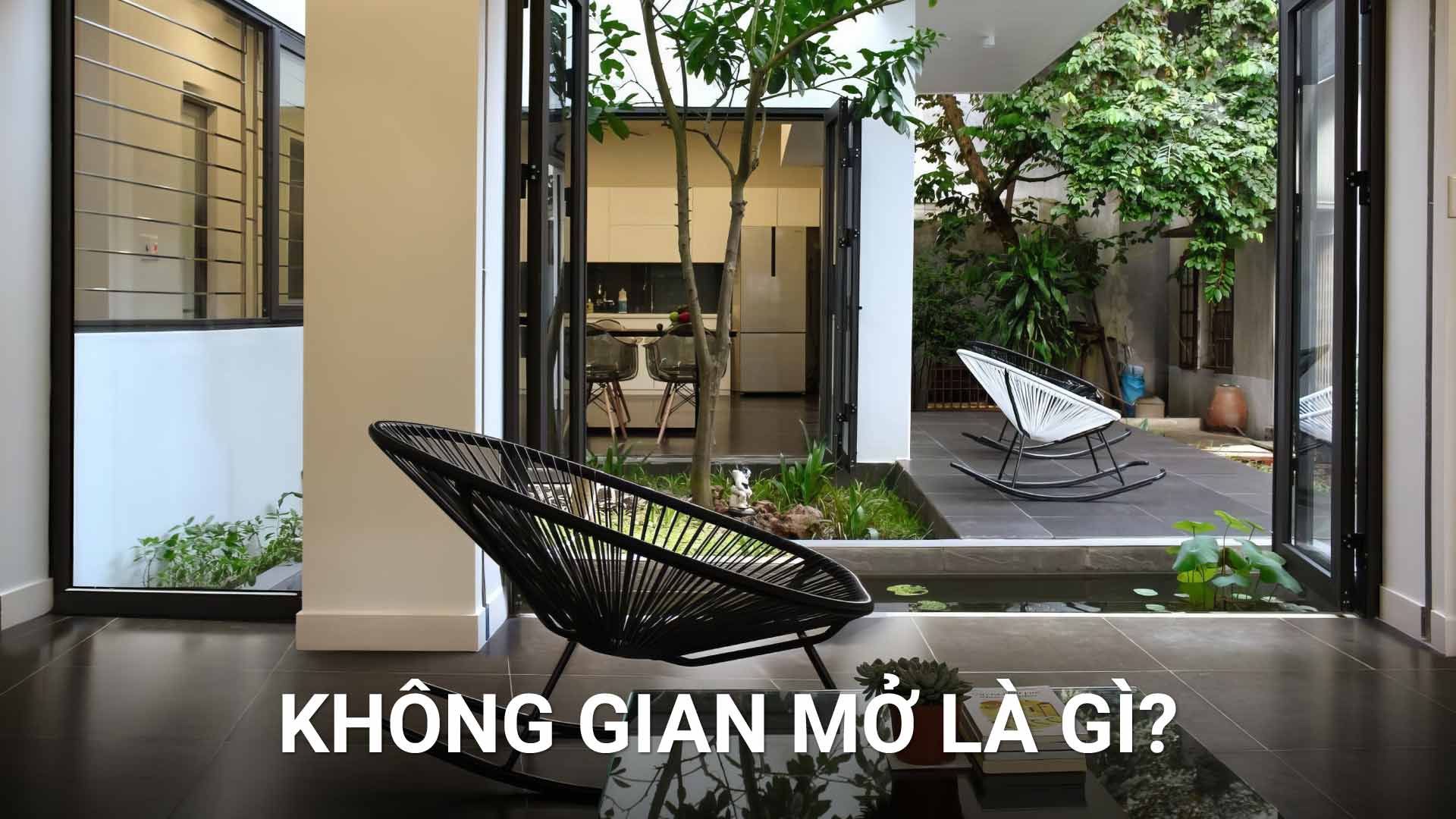
1. What is open space design?
Open-space design represents an interior spatial planning strategy that promotes continuity by removing physical partitions between distinct functional zones. In contrast to conventional layouts characterized by compartmentalized rooms, this approach consolidates primary living areas—such as the living room, kitchen, and dining space—into a cohesive and integrated environment. The absence of structural barriers enables the more effective diffusion of natural light, enhances visual connectivity, and supports fluid movement throughout the interior.
Moreover, this configuration fosters increased social interaction by allowing occupants to communicate and observe activities within the shared domain. Open-plan arrangements are particularly advantageous for residential units with limited floor areas, as they optimize spatial utilization while generating an enhanced perception of openness beyond the actual physical dimensions.
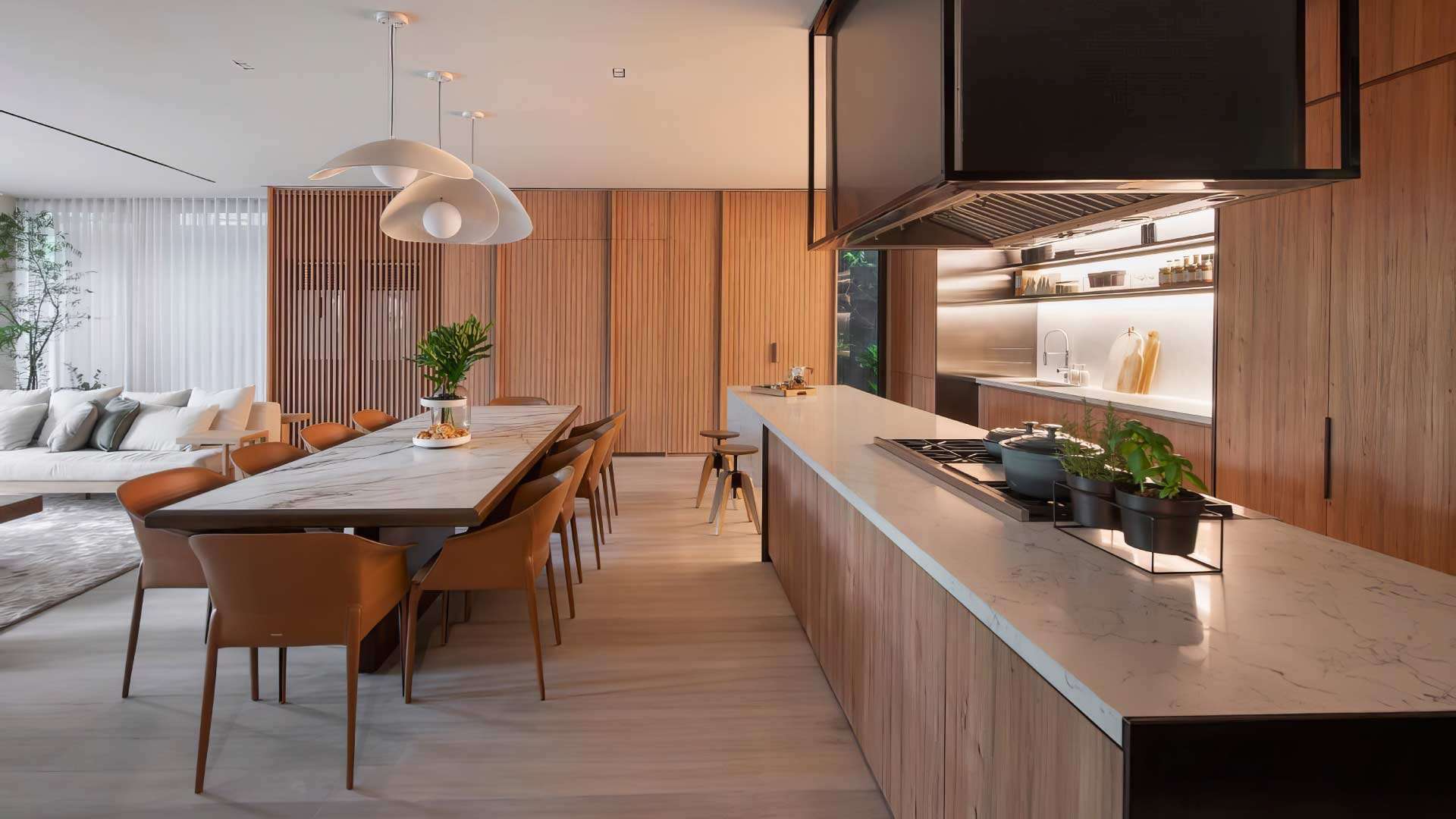
2. What are the characteristics of open-space design?
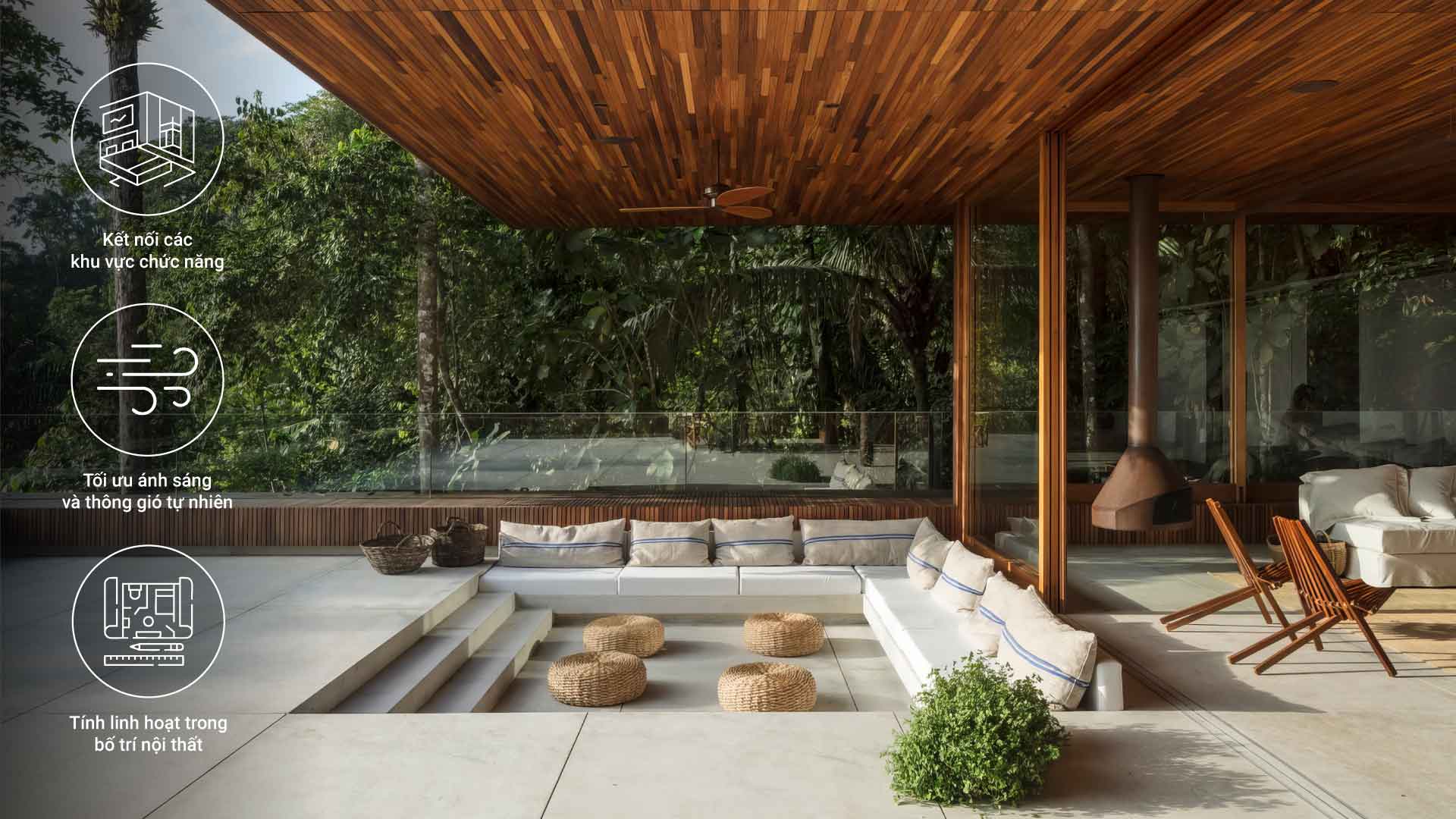
Open space environments exhibit 03 defining characteristics that contribute to their prominence in contemporary interior design discourse:
- Functional spatial integration: This layout strategy removes physical partitions between primary functional zones—such as the living room, kitchen, and dining area—thereby establishing visual and spatial continuity. Such integration enhances interpersonal interaction, enabling simultaneous yet interconnected activities within a shared domestic setting.
- Enhanced natural illumination and ventilation: The reduction of internal barriers facilitates deeper penetration of daylight throughout the interior, thereby decreasing dependence on artificial lighting during daytime hours. Moreover, improved air circulation promotes healthier indoor environmental quality and contributes to greater energy efficiency by mitigating reliance on mechanical cooling systems.
- Spatial adaptability and configurational flexibility: Open-plan arrangements allow for dynamic reconfiguration of furniture and activity zones in response to evolving functional requirements. For instance, dining areas may be expanded to accommodate social gatherings, while living spaces can be redefined as home offices without the structural limitations imposed by fixed partitions.
3. What advantages does open space design offer?
Open-concept design offers a range of tangible advantages that contribute to enhanced living standards and more efficient spatial utilization within residential environments:
- Optimization of spatial efficiency: The removal of internal partitions increases the effective use of floor area, generating additional functional zones and improving overall spatial performance.
- Enhanced social connectivity: By facilitating visual and physical continuity among activity areas, this layout promotes sustained interaction among household members, strengthens familial bonds, and enables more effective supervision of children.
- Improved daylight penetration and natural ventilation, supporting energy conservation: The unobstructed configuration allows natural light to permeate deeper into the interior, thereby reducing dependence on artificial lighting. Enhanced airflow further decreases reliance on mechanical cooling systems, contributing to greater energy efficiency.
- Adaptability in spatial configuration and functional use: The absence of fixed structural barriers enables flexible reorganization of furniture and activity zones in response to evolving domestic needs or special events, without necessitating structural modifications.
- Augmented perception of spaciousness and contemporary character: Continuous sightlines and spatial fluidity create an expanded visual field, making interiors appear larger than their actual dimensions and aligning with modern urban living paradigms.
4. What disadvantages does open concept design offer?
In addition to its notable advantages, the open-concept layout presents three key limitations that warrant careful consideration prior to implementation:
- Reduced privacy and limited acoustic control: The absence of physical partitions allows sound to travel freely across functional areas, potentially disrupting rest and concentration. Cooking odors from the kitchen may also disperse into adjacent spaces, affecting overall indoor comfort.
- High demands on design coherence, material selection, and color coordination: Because all areas remain within a continuous visual field, a strong sense of stylistic consistency is essential. Material finishes must meet elevated aesthetic and performance standards to ensure overall visual harmony and durability.
- Challenges in functional zoning if inadequately planned: Without clearly defined spatial boundaries, interiors may appear disorganized, making it more difficult to structure furnishings and activities according to specific purposes.
To mitigate these constraints, commonly adopted strategies include the integration of lightweight movable partitions, decorative greenery, or curtains to provide adjustable privacy. The incorporation of sound-absorbing materials—such as area rugs and heavy drapery—can improve acoustic performance between zones. Furthermore, thoughtful interior planning that employs built-in cabinetry, multifunctional shelving systems, and deliberate color zoning can effectively delineate functional areas while preserving spatial continuity.
5. What materials are used in open-concept design?
Three principal material categories are widely favored in contemporary open-concept interiors, namely wood, glass, and mineral-based materials such as concrete, brick, and stone. Each material contributes distinct functional and aesthetic values to spatially integrated environments, as outlined below.
Wood
Wood remains a predominant material choice due to its inherent warmth, natural texture, and psychological comfort. Within spatially integrated layouts, wood fosters a sense of relaxation and intimacy, making it particularly suitable for residential settings and workplace environments that seek a welcoming atmosphere.
Although solid wood offers premium aesthetic value, its relatively high cost has encouraged many households to adopt engineered wood alternatives, such as products manufactured by An Cuong, which provide a broad spectrum of colors and surface finishes adaptable to both modern and traditional design languages.
Notably, engineered wood panels finished with high-gloss acrylic surfaces enhance daylight distribution and visually expand interior volumes through superior light reflectivity. Beyond their aesthetic appeal, acrylic coatings generate depth perception and amplify spatial luminosity, thereby reinforcing the openness characteristic of integrated layouts.
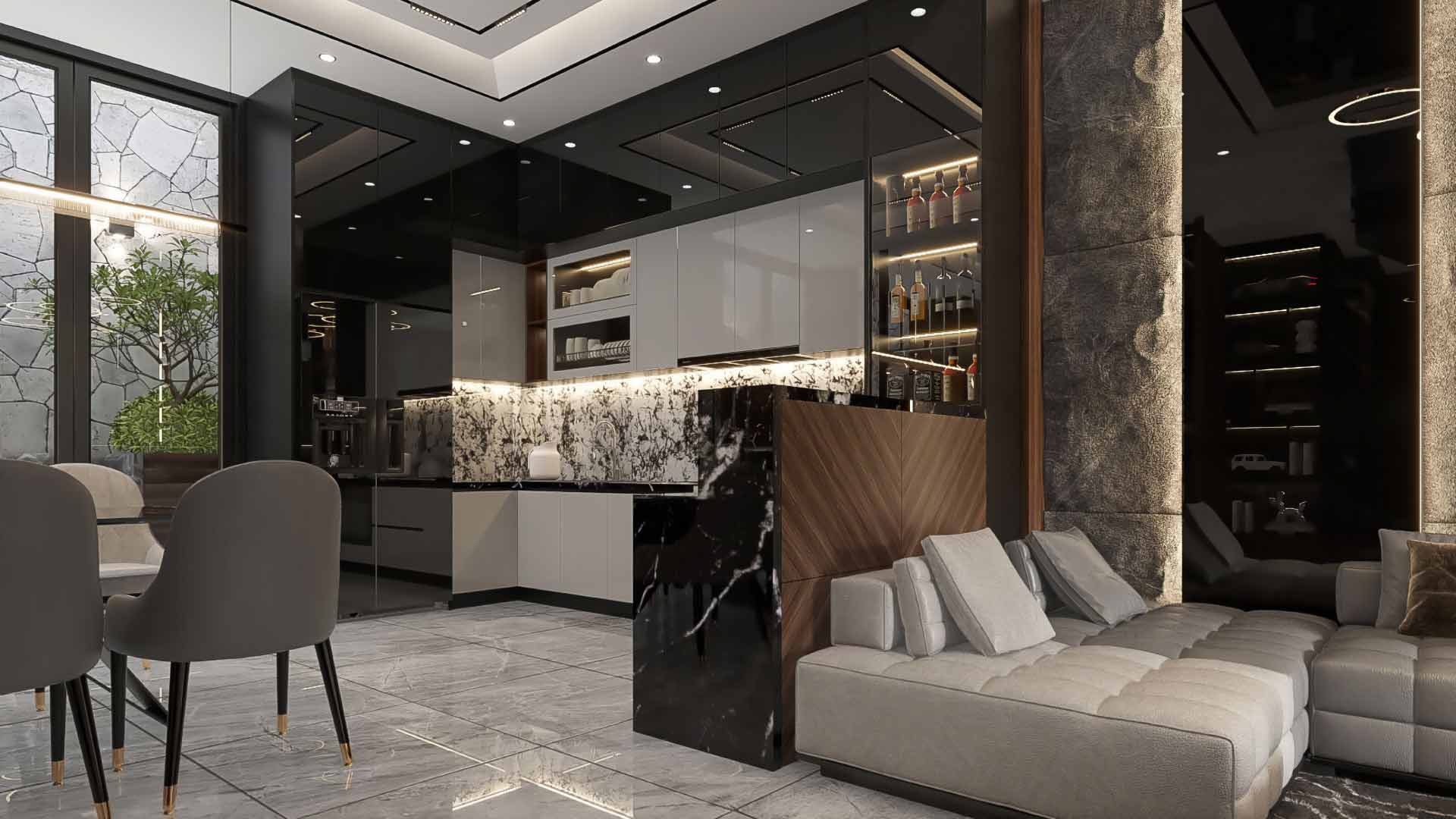
Glass
Glass is extensively employed in spatially integrated interior configurations to strengthen visual connectivity and maximize natural illumination. Applications include expansive glazing systems, transparent partitions, and full-height glass walls, all of which contribute to improved daylight penetration and spatial continuity. Tempered safety glass is typically prioritized to ensure structural durability and user safety while maintaining design transparency.
Concrete, Brick, and Stone
Concrete and brick are frequently incorporated to articulate industrial or contemporary spatial identities. Concrete surfaces—applied to flooring, walls, or architectural accents—convey a raw yet refined aesthetic, balancing material authenticity with modern minimalism.
Natural and engineered stone materials are likewise prevalent in integrated environments, particularly in exterior zones and reception areas, owing to their durability, structural resilience, and distinctive natural character. Collectively, these mineral-based materials provide textural contrast and reinforce the architectural integrity of open, continuous interior spaces.
6. Design Tips and Optimization Strategies for Open-Concept Spaces
To achieve an optimal open-concept interior, it is essential to understand five fundamental principles concerning spatial arrangement, color coordination, lighting strategy, material selection, and intelligent zoning, as outlined below:
- Systematic and functional furniture layout: Furnishings should be proportionally scaled to the overall floor area. For example, oversized sofas may disrupt spatial balance when the living area is directly integrated with the kitchen and dining zones. Circulation pathways must be carefully organized to ensure unobstructed movement and ergonomic efficiency.
- Strategic color coordination: A unified primary color palette should be established to maintain visual coherence, complemented by contrasting accents in decorative elements to avoid monotony. Neutral tones—such as white, beige, and light gray—serve as effective base colors, enhancing the perception of spaciousness and facilitating integration with other hues. Consideration of lighting conditions is crucial, as natural daylight and artificial illumination may alter color perception.
- Prioritization of natural illumination: Core activity areas, including the living and dining spaces, should be positioned adjacent to windows or balconies to maximize daylight access. Reflective surfaces, such as mirrors or high-gloss acrylic finishes, can further enhance light diffusion. The use of double-layer curtains allows for adaptable light control throughout the day.
- Appropriate material selection aligned with design intent: Complementary materials should be combined strategically—wood to introduce warmth, glass to enhance transparency, and metal to convey contemporary character. Durability, maintenance requirements, and long-term performance must also be carefully evaluated.
- Functional zoning while preserving spatial continuity: Furniture elements such as bookshelves, sofas, or kitchen islands can function as subtle spatial dividers, establishing gentle boundaries between activity zones. Variations in floor elevation or flooring materials may also delineate areas without the need for permanent structural partitions.
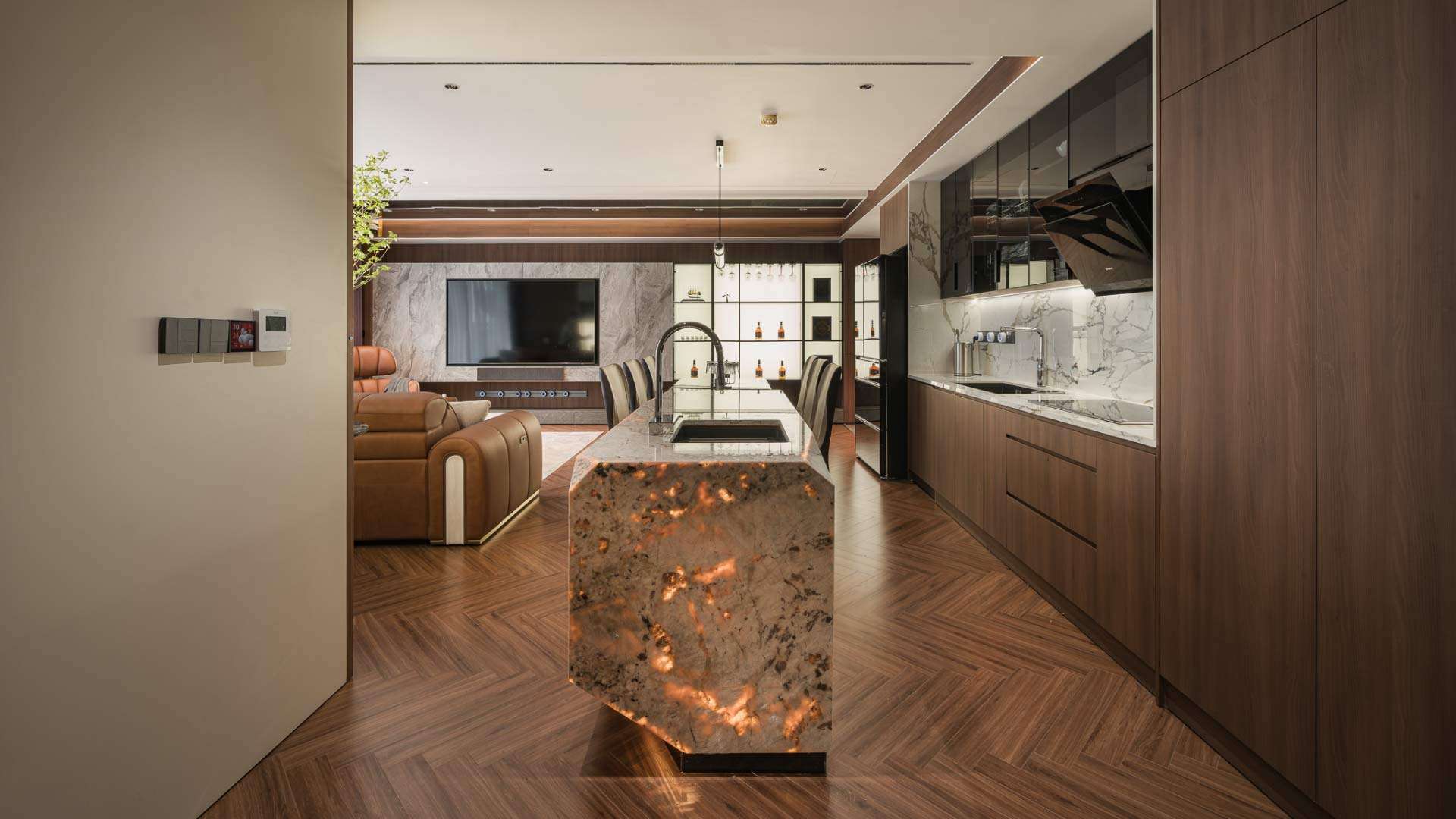
In summary, this discussion has examined the defining attributes of integrated spatial layouts, including their conceptual foundations, characteristics, advantages, limitations, and material applications. Such configurations offer significant benefits, including optimized spatial efficiency, enhanced family connectivity, improved energy performance, and an expanded perception of interior volume. Although challenges related to privacy and acoustics may arise, these can be effectively mitigated through strategic planning and appropriate material selection, such as engineered acrylic-finished wood, glass, and natural stone. Consequently, open-concept environments remain a compelling solution for contemporary residential design.
An Cuong provides comprehensive solutions for integrated interior configurations through its portfolio of high-quality engineered wood products. Notably, its acrylic-finished engineered wood panels feature high-gloss surfaces that enhance light reflectivity and visually enlarge interior spaces. For detailed consultation on spatial planning and material selection, clients are encouraged to contact An Cuong via hotline 1900 6944 or visit the official website at ancuong.com for competitive quotations and professional guidance.
🏠 Components And Accessories For The Furniture Industry
📞 Hotline: 1900 6944
-
#GoAnCuong
-
#AnCuong
-
#woodworking